The First Thanksgiving
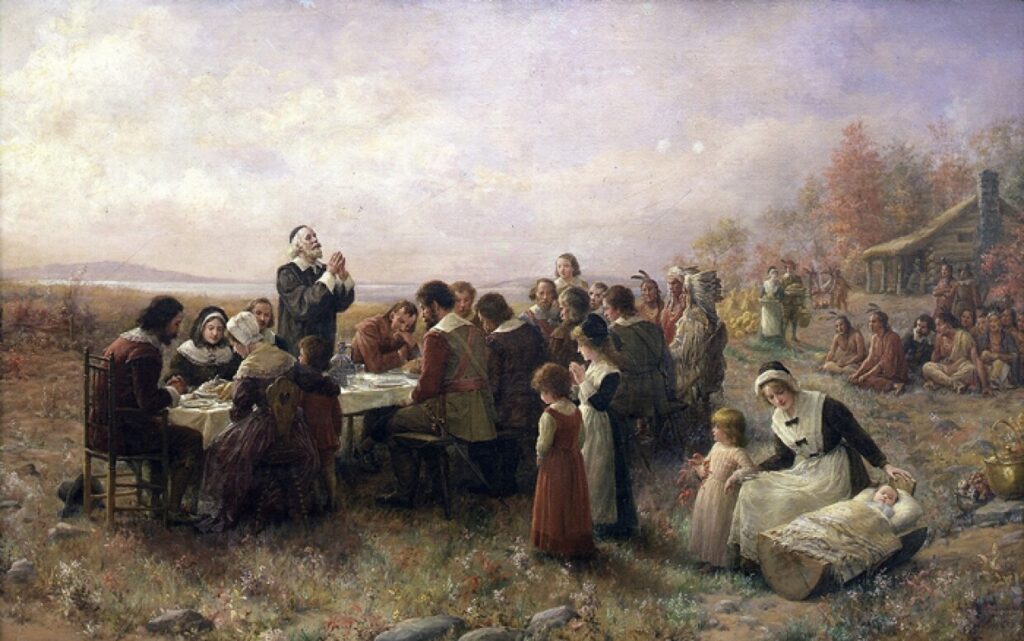
The First Thanksgiving at Plymouth was not a formal holiday, but a three-day harvest celebration held in the autumn of 1621 (commonly accepted as October 1621) by the Pilgrim settlers and the Wampanoag people. This gathering focused entirely on the feast, serving as a rare moment of abundance and peace following a devastating winter. Driven by the successful cultivation of local crops, the event brought together approximately 50 English survivors and 90 Wampanoag warriors to share an unprecedented culinary bounty.
The menu of this historic feast differed sharply from modern Thanksgiving traditions. While the Governor of Plymouth Colony, William Bradford, noted that the settlers gathered a large amount of wild fowl, it is unlikely that domestic turkey was the centerpiece. Instead, the feast relied heavily on waterfowl like ducks and geese. The culinary landscape shifted significantly when Massasoit, the leader of the Wampanoag, arrived with his men. To contribute to the feast, the Wampanoag hunted and gifted five deer to the plantation. This abundance of venison became the foundational meat of the multi-day celebration, roasted over open pits and shared among all attendees.
In addition to wild game, the feast showcased the successful integration of English agricultural efforts and Native American ecological knowledge. The primary crop celebrated was flint corn, a native variety that Squanto had taught the Pilgrims to cultivate using fish as fertilizer. This corn was boiled, ground, and turned into porridge or cornmeal cakes. The surrounding landscape also provided a wealth of seafood, which was central to the daily meals. The participants feasted on cod, bass, clams, mussels, and even eels, which were plentiful in the cold waters of Cape Cod Bay.
What was notably missing from the tables were the sweet treats commonly associated with the holiday today. Although wild fruits like cranberries, plums, and grapes grew in the area, they were eaten fresh or dried rather than cooked into sweetened sauces or pies. The Pilgrims had long exhausted their supply of sugar, and they possessed no butter or wheat flour to bake traditional English pastries. Consequently, there were no pumpkin pies or cranberry jellies at this inaugural meal. Instead, pumpkins and squashes were boiled or roasted plain.
Ultimately, the feast at Plymouth was characterized by its length and communal nature. For three consecutive days, the two distinct cultures ate, drank, and engaged in recreation together. The Wampanoag and the Pilgrims played games, practiced archery, and competed in shooting exhibitions. The feast served as a profound sensory experience—the smell of roasting meats over wood fires, the taste of unfamiliar native seafood, and the shared consumption of a hard-won harvest. It was a brief, historic window where survival was secured, and cross-cultural diplomacy was conducted entirely through the universal language of food.